


-
Getting Started with Arduino
Posted in: TutorialsA series of video tutorials and projects to get you started on Arduino


-
-

-
Playlist Content
-

 1. Arduino – What bits to start with…and a bit of head bashing!
* Choosing between Arduino UNO or Mega – I compare specs.
* Choosing an LCD display type
* Understanding issues with the different versions of the Arduino software / sketch editor.
* A quick look at my digital thermometer project.Handy websites:
http://www.toddfun.com/
http://www.arduino.cc/
http://tronixstuff.wordpress.com/
http://www.timnolan.com
http://www.timnolan.com/index.php?pag…
Dave Jone EEVBlog: http://www.eevblog.com/Parts List:
1 1x Arduino UNO R3
* ATmega328 microcontroller
* Input voltage – 7-12V
* 14 Digital I/O Pins (6 PWM outputs)
* 6 Analog Inputs
* 32k Flash Memory
* 16Mhz Clock Speed
2 1x Breadboard 840 Point White
3 1NPA-AS3 Relay (3V , 3A)
4 6x 5mm Colour LED’s
5 1x NPN transistor (P2N2222A)
6 1x Triple Output RGB LED
7 5x 5mm Microswitches
8 1x Jumper Wire Kit
9 1x LDR (Photocell
10 1x Temperature Sensor (LM35)
11 2x High Bright LED (White)
12 1x Small Servo Motor
13 1x Potentiometer
14 2x Resistor Packs (220, 10k)
15 1x USB Cable
16 1x Zener Diode (1N5225)
17 1x Piezo
18 1x LM317 Voltage Regulator
19 1x 9V Battery Connector
20 1x Protoplastic 100g
21 1x Resource CDMy addition add-on: Serial Enabled 16×2 LCD – Black on Green 5V
Projects I plan to attempt in the near future:
* Digital thermometer with stand alone data logging
* DC power and temperature data logger for solar panel performance comparisons
* An MPPT solar charge controller to investigate the various tracking algorithms used in these devices. -
 2. Getting Started and Connected!
In this video I cover the following:
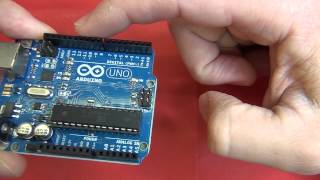
* What is Arduino?
* What is a sketch?
* What is the Arduino (software) IDE (interactive development environment) arduino-1.0.1
* Arduino philosophy
* We take a look at the Arduno hardware.
* I cover how to download the Arduino Software and drivers and then how to install them.
* What happens when the Arduino USB device driver fails and how to solve it.
* I upload a sketch to the Arduino UNO R3 to test it and blink an LED.
* I discuss the project for tutorial #2, a voltmeter with Min Max Ave.
* I talk about the Sparkfun serial enabled 16 x 2 LCD and the challenges it poses.Arduino Uno R3 features:
* ATmega328 micro controller
* Input voltage – 7-12V
* 14 Digital I/O Pins (6 PWM outputs)
* 6 Analogue Inputs
* 32k Flash Memory
* 16Mhz Clock SpeedHandy websites:
http://www.toddfun.com/
http://www.arduino.cc/
http://tronixstuff.wordpress.com/
http://www.timnolan.com
http://www.timnolan.com/index.php?pag…Arduino Site: http://www.arduino.cc/
Arduino software / IDE: http://arduino.cc/en/Main/Software
Arduino forum: http://arduino.cc/forum/ -
 3. Sketch Structure, Variables and Procedures
In this video I cover the following:
* What is Arduino?
* What is the sketch structure?
* What are variables and what types of variables – int, integer, float, floating point, byte, string array.
* The build of the voltage divider for the voltmeter can be found in the Ohms law tutorial:
http://www.youtube.com/watch?v=AWLJAD…
* What is the Arduino (software) IDE (interactive development environment) arduino-1.0.1
* What is an Arduino library / libraries
* Arduino philosophy
* We take a look at the Arduno hardware.
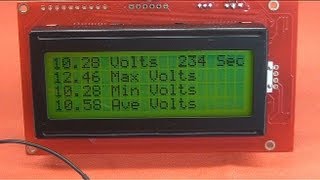
* I discuss the project for the tutorial, a voltmeter with Min Max Ave.
* I talk about the Sparkfun serial enabled 16 x 2 LCD and the challenges it poses.
* I talk about the Sparkfun serial enabled 20 x 4 LCD.
* Arduino for beginners / dummies / newbiesArduino Uno R3 features:
* ATmega328 micro controller
* Input voltage – 7-12V
* 14 Digital I/O Pins (6 PWM outputs)
* 6 Analogue Inputs
* 32k Flash Memory
* 16Mhz Clock SpeedHobbyTronics – South Africa’s electronic components supplier for your electronics hobby needs. Specialist supplier of electronic components such as sensors, robotics, breakout boards, Arduino, prototyping to the hobby and educational electronics market in South Afica and Africa. We supply the components you need.
http://www.hobbytronics.co.za/Handy websites:
http://www.toddfun.com/
http://www.arduino.cc/
http://tronixstuff.wordpress.com/
http://www.timnolan.com
http://www.timnolan.com/index.php?pag…Arduino Site: http://www.arduino.cc/
Arduino software / IDE: http://arduino.cc/en/Main/Software
Arduino forum: http://arduino.cc/forum/ -
 4. Functions, Return Values and Variables
Sketch / code used in tutorial: http://mjlorton.com/forum/index.php?t…
Buy your Arduino kit here: http://astore.amazon.com/m0711-20?_en…Arduino Site: http://www.arduino.cc/
Arduino software / IDE: http://arduino.cc/en/Main/Software
Arduino forum: http://arduino.cc/forum/Items and topics covered in this video:
* Local and global variables
* Functions / procedures
* Return values from functions
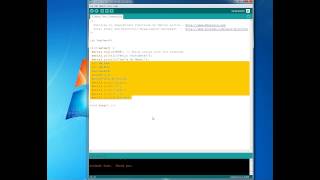
* Sample sketch code that does Math / arithmetic and write to the terminal
* Some commands used: Serial.print; Serial.println, if, else, void setup, void loop, returnArduino Uno R3 features:
* ATmega328 micro controller
* Input voltage – 7-12V
* 14 Digital I/O Pins (6 PWM outputs)
* 6 Analogue Inputs
* 32k Flash Memory
* 16Mhz Clock SpeedHandy websites:
http://www.toddfun.com/
http://www.arduino.cc/
http://tronixstuff.wordpress.com/
http://www.timnolan.com
http://www.timnolan.com/index.php?pag…
http://www.ladyada.net/learn/arduino/… -
 5. LCD Displays, Libraries and Troubleshooting
A tutorial on interfacing LCDs (liquid crystal displays) with Arduino. We take a look at libraries and the role they play…and the potential issues, errors and troubleshooting involved.
We look at several types of displays but concentrate on the 4×20 Sparkfun serial enabled LCD display.SparkFun kit from my Amazon Store:
http://astore.amazon.com/m0711-20?_en…A link to the SparkSoftLCD library for the Arduino by C. A. Church – fixes issue with float variables on serial enabled LCD displays:
http://mjlorton.com/forum/index.php?t…Link to new Arduino software / IDE 1.0.5:
http://arduino.cc/en/main/softwareLink to the LiquidCrystal library with examples and wiring:
http://arduino.cc/en/Tutorial/LiquidC…Link to the SparkFun SerLCD 2.5 datasheet:
https://www.sparkfun.com/datasheets/L…Link to the Hitachi HD44780U dot-matrix liquid crystal display controller datasheet:
https://www.sparkfun.com/datasheets/L…SparkFun LCD displays:
https://www.sparkfun.com/categories/7…How to install Arduino libraries / Installing Additional Arduino Libraries:
http://arduino.cc/en/Guide/LibrariesHow to create a library for Arduino / Writing a Library for Arduino:
http://arduino.cc/en/Hacking/LibraryT…Troubleshooting compiling errors:
error: WConstants.h: No such file or directory
error: Wires.h: No such file or directory
Change / point library to Arduino.h -
 6. Digital Voltmeter, Arduino Analog to Digital Converter
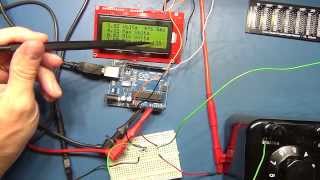
In this tutorial we look at a digital voltmeter project and how it used the Arduino analog input. This involves understanding ADC or analog to digital converters and how they work. We also troubleshoot why the output reading on the LCD display is noisy.
We also gave a quick peek at the Arduino DUE: http://arduino.cc/en/Main/arduinoBoar…Thanks to Clarence of “Clarence’s Wicked Mind” for the original code that I used and updated for this project: http://www.clarenceho.net:8123/blog/a…
The sketch / project code for the digital voltmeter:: http://mjlorton.com/forum/index.php?t…
Also read Measuring Stuff – The Arduino DAQ Chronicles: https://sites.google.com/site/measuri…
The Arduino Due is a microcontroller board based on the Atmel SAM3X8E ARM Cortex-M3 CPU (datasheet). It is the first Arduino board based on a 32-bit ARM core microcontroller. It has 54 digital input/output pins (of which 12 can be used as PWM outputs), 12 analog inputs, 4 UARTs (hardware serial ports), a 84 MHz clock, an USB OTG capable connection, 2 DAC (digital to analog), 2 TWI, a power jack, an SPI header, a JTAG header, a reset button and an erase button.
Buy the Arduino DUE here: http://astore.amazon.com/m0711-20/det…
-
-
-
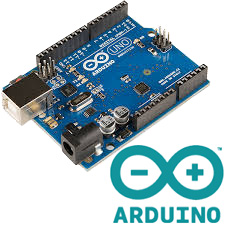 This small open-source computer packs a powerful punch in a tiny package. It is a terrific platform on which to build an endless amount of projects. It has a large user community that uses it build microcontroller-based kits for building digital devices and interactive objects. Martin gives you the knowledge to get started with this mighty machine.

-
Please support the creation of new video content on MJLorton.com by turning off your ad-blocker
Thanks, Martin
-
Please support MJLorton.com and our sponsors at Programming Electronics Academy by turning off your ad-blocker
Thanks, Martin
-
Please support MJLorton.com and our sponsors at Programming Electronics Academy by turning off your ad-blocker
Thanks, Martin
-
Please support MJLorton.com and our sponsors at Tektronix by turning off your ad-blocker
Thanks, Martin
-
HDI PCB
Bittele Electronics -
Circuit Card Assembly
-
Please support MJLorton.com and our sponsors at Rheingold Heavy by turning off your ad-blocker
Thanks, Martin
-
Please support MJLorton.com and our sponsors at Contextual Electronics by turning off your ad-blocker
Thanks, Martin
-
Please support MJLorton.com and our developer Steve Kirkby by turning off your ad-blocker
Thanks, Martin